
The Avenue des Champs-Élysées. The name alone is enough to inspire dreams. Yet many travelers leave disappointed, with lighter wallets and sore feet, wondering what they missed. The truth is that the avenue combines genuinely remarkable experiences with others designed mainly to separate tourists from their money. This guide will help you tell the difference.
Understand the Avenue Before You Visit
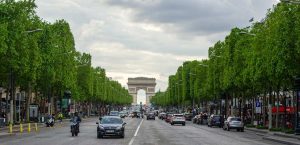
The Champs-Élysées stretches for approximately 1.9 kilometers (1.2 miles) between Place de la Concorde and the Arc de Triomphe. It can roughly be divided into two sections: the lower part, which is quieter and lined with gardens and cinemas, and the upper part, which is more commercial and dominated by international flagship stores and tourist-oriented restaurants.
Before you begin exploring, remember one simple rule: the flashiest attractions along this avenue are often the ones that offer the least value for the highest price. That doesn’t mean you should avoid the Champs-Élysées—it simply means you should explore it wisely.
What Is Actually Worth Your Time
The Arc de Triomphe and Its Panoramic Terrace
This is the avenue’s absolute highlight, and it fully deserves its reputation. Climbing to the top of the Arc de Triomphe rewards you with one of the finest 360-degree views in Paris. You’ll simultaneously see the Champs-Élysées, the Eiffel Tower, La Défense, and the endless sea of Haussmann rooftops. Book your ticket online in advance to avoid the often lengthy queue at the monument. Admission is free for European Union residents under the age of 26.
The Cinemas and Galleries at the Lower End of the Avenue
Between Place de la Concorde and the Rond-Point des Champs-Élysées, the atmosphere changes dramatically. Here you’ll find tree-lined gardens, historic cinemas such as Gaumont Marignan, and shopping arcades like the former Lido de Paris area and Claridge. These quieter spaces, often overlooked by hurried tourists, provide a pleasant break and a more relaxed Parisian atmosphere.
Luxury Flagship Stores: Great for Window Shopping, Not Necessarily for Buying
Even if you have no intention of making a purchase, strolling past the impressive façades of Louis Vuitton, Cartier, and Dior is an experience in itself. Several flagship stores were designed by world-renowned architects, turning the avenue into an open-air showcase of contemporary urban design—and admiring it costs nothing.
The Grand Palais and Petit Palais
Technically located just off the Champs-Élysées and only a few minutes away on foot, these two landmarks are often overshadowed by the shopping district. That is a mistake. The Petit Palais offers free admission to its outstanding permanent collection, spanning from antiquity to the early 20th century. The recently renovated Grand Palais hosts major temporary exhibitions throughout the year. Together, they rank among the finest museums in Paris and are easily accessible from the avenue.
The Christmas Market (Seasonal)
If you’re visiting Paris between late November and late December, the Champs-Élysées Christmas Market is among the most spectacular in France. Hundreds of illuminated wooden chalets, the scent of mulled wine and gingerbread, and the festive atmosphere create an unforgettable experience. Prices are admittedly high, but the atmosphere alone makes it worthwhile—even if all you buy is a cup of hot chocolate.
What to Avoid (or Approach with Caution)
Restaurants Directly on the Avenue
This is probably the biggest tourist trap. Nearly every restaurant with a terrace directly overlooking the Champs-Élysées charges premium prices for food that rarely lives up to expectations. Menus are often generic, service can be rushed, and the overall experience disappointing. If you want to eat near the Champs-Élysées, head into the side streets, such as Rue Marbeuf, Rue du Colisée, or Avenue George V. You’ll generally find much better restaurants at lower prices.
International Retail Chains You Already Know
Did you travel all the way to Paris just to shop at H&M or Zara? The Champs-Élysées has several of them. These stores offer nothing uniquely Parisian and can be found in major cities around the world. Unless you genuinely need something, your time is better spent elsewhere.
Street Scams and Unlicensed Vendors
Unfortunately, the avenue also attracts its share of well-known scams: shell games, fake petition collectors, and individuals who conveniently “find” a gold ring before asking you for money. Stay alert, avoid engaging with persistent strangers, and keep your belongings secure, especially in crowded areas.
Souvenir Shops on the Avenue
The handful of souvenir stores located directly on or near the Champs-Élysées often charge significantly inflated prices for items that can be purchased much more cheaply in tourist districts such as Montmartre or around the Louvre. A small plastic Eiffel Tower bought here may easily cost two or three times more than elsewhere.
How to Plan Your Visit Wisely
- Come early in the morning. Before 9:00 a.m., the avenue is almost empty, and the morning light beautifully illuminates the façades for photography.
- Or visit after dark. Once the sun sets, the illuminated avenue offers one of the most beautiful nighttime scenes in Paris—and it’s generally less crowded than during the day.
- Allow no more than two hours for the avenue itself, including your visit to the Arc de Triomphe.
- Combine your visit with nearby museums, including the Grand Palais, Petit Palais, and the Palais de la Découverte if you’re traveling with children.
- Use the Metro or a Vélib’ bike instead of walking the entire length of the avenue. Franklin D. Roosevelt and George V metro stations are conveniently located if you’d like to shorten your route.
The Question Everyone Asks: Is It Worth Visiting?
Yes—absolutely, but probably not for the reasons most people expect. The Champs-Élysées is not primarily a shopping or dining destination. Above all, it is an urban spectacle, a monumental boulevard that reflects the history and ambition of Paris. The Arc de Triomphe, the grand perspective toward Place de la Concorde and its Obelisk, the elegant Haussmann façades, and the unique atmosphere of walking along one of France’s most historic avenues are all very real experiences—and well worth your time.
Disappointment usually comes from misplaced expectations. If you’re searching for authentic everyday Parisian life, you’ll find it more easily in neighborhoods such as Le Marais, Butte-aux-Cailles, or along Canal Saint-Martin. But if you’re looking for grand boulevards, monumental architecture, and landmarks that have earned their worldwide reputation, the Champs-Élysées still has plenty to offer.
Conclusion
The Avenue des Champs-Élysées remains one of the world’s most famous boulevards—as long as you don’t expect it to be something it isn’t. Climb the Arc de Triomphe, take an evening stroll beneath the lights, step inside the Petit Palais, and skip the overpriced terrace restaurants. With a little discernment, this legendary avenue will deliver exactly what it promises: the grand spectacle of Paris, without the unnecessary expense.