
Montmartre is one of the most visited neighbourhoods in Paris — and one of the most misunderstood when it comes to food. The steep streets around the Sacré-Cœur are lined with restaurants that look charming but serve forgettable meals at inflated prices. If you’ve ever eaten near the top of the hill and wondered why the food was disappointing, you’re not alone.
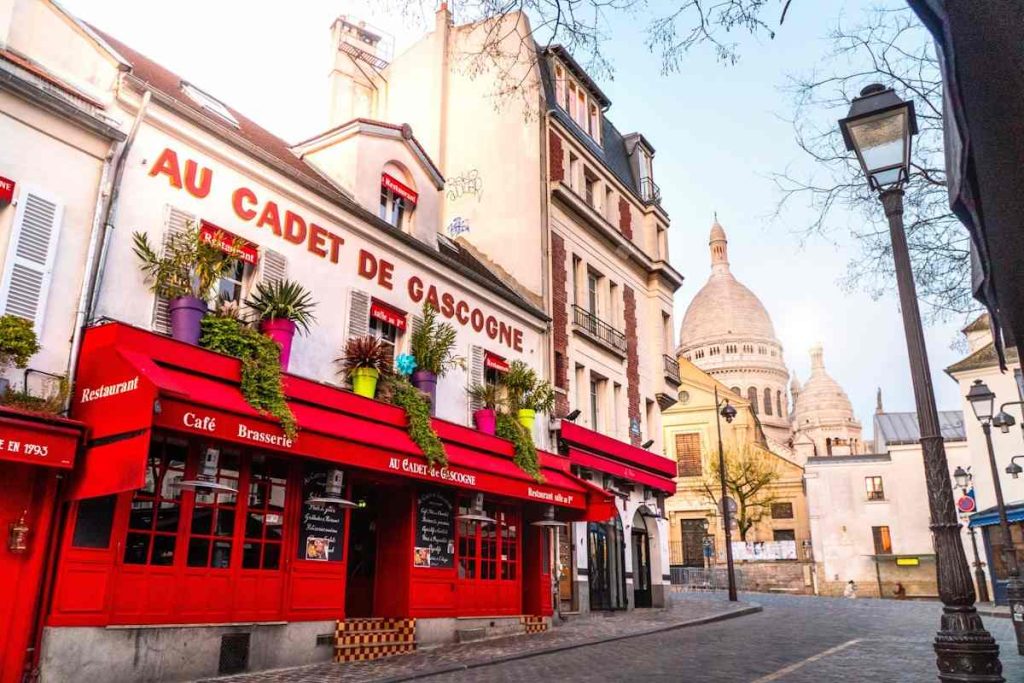
The good news is that Montmartre still has a thriving local dining scene. You just need to know where to look — and, more importantly, where not to eat. This guide cuts through the tourist traps and points you toward the restaurants, bistros, and neighbourhood spots that Parisians actually frequent.
Why So Many Restaurants in Montmartre Disappoint Tourists
The area immediately surrounding the Sacré-Cœur — particularly along Rue du Chevalier de la Barre and the Place du Tertre — operates on high footfall and low return visits. Restaurants here rarely need to impress anyone twice. The result is overpriced fixed menus, reheated dishes, and aggressively marketed “authentic French cuisine” that has little to do with how locals actually eat.
The rule of thumb most Parisians follow: the further you walk from the Sacré-Cœur, the better the food gets. Head down the hill and into the residential streets of the 18th arrondissement, and the dynamic shifts entirely.
The Neighbourhoods Within Montmartre Worth Exploring
Montmartre is not just the hill. The broader 18th arrondissement contains several distinct pockets that each have their own local restaurant culture:
- Abbesses and Rue Lepic: The most accessible “local” area, popular with young Parisians and creative professionals. Good for casual lunch spots and wine bars.
- Rue des Abbesses and surroundings: A mix of neighbourhood bistros, coffee shops, and bakeries that serve the local population year-round.
- Château Rouge and Rue du Poteau: A more diverse area with excellent African and Caribbean cuisine, as well as traditional French bistros that attract very few tourists.
- Jules Joffrin and the upper 18th: The quietest and most residential part of the arrondissement — where you’ll find neighbourhood restaurants with no English menus and very good value.
What to Look for in a Good Montmartre Restaurant
Before diving into specific recommendations, it helps to know the signals that separate a genuine neighbourhood restaurant from a tourist trap. Here’s what locals look for:
- A handwritten or chalkboard menu that changes daily — this indicates fresh, seasonal cooking rather than a frozen-food operation.
- Mostly French-speaking tables at lunchtime, when locals eat out more frequently than in the evening.
- A short, focused menu — a restaurant trying to cook everything for everyone usually does nothing well.
- No photos on the menu — in Paris, picture menus are almost universally a bad sign.
- A prix-fixe lunch formula offering starter, main, and sometimes dessert at a reasonable price. This is a staple of genuine Parisian bistro culture.
Types of Restaurants Locals Go to in Montmartre
The Neighbourhood Bistro
The classic Parisian bistro is alive and well in Montmartre — you just need to avoid the ones with menus in five languages displayed outside. A genuine neighbourhood bistro typically serves a short lunch formula on weekdays, with dishes like steak frites, œufs mayonnaise, terrine de campagne, or a roast of the day. Expect to pay somewhere in the range of around €15 to €20 for a two-course lunch. Wine is usually available by the glass at reasonable prices.
These restaurants tend to be busiest between noon and 2pm on weekdays, when office workers and residents sit down for a proper midday meal. If you arrive at 12:30pm without a reservation on a weekday, you may have to wait.
The Cave à Vins (Wine Bar)
Montmartre has a growing number of natural wine bars that double as excellent places to eat. These spots typically offer small plates — charcuterie, cheese, seasonal vegetables — alongside a carefully chosen selection of low-intervention wines. They’re relaxed, tend to be open in the evenings, and attract a knowledgeable local crowd. They’re also considerably more affordable than equivalent spots in the Marais or Saint-Germain.
West African and Afro-Caribbean Restaurants
The area around Château Rouge is one of the best places in Paris to eat West African cuisine. You’ll find restaurants serving dishes from Senegal, Cameroon, Côte d’Ivoire, and the French Antilles at prices that reflect a local clientele rather than a tourist one. These are often small, family-run spots with no online presence — word of mouth is how they fill their tables.
The Boulangerie and Casual Lunch Spot
Not every meal in Montmartre needs to be a sit-down affair. Local bakeries serve excellent sandwiches, quiches, and savoury tarts at lunchtime that represent some of the best value eating in the neighbourhood. A proper jambon-beurre or a slice of quiche lorraine from a good bakery costs a fraction of what you’d pay at a restaurant — and often tastes better.
Practical Tips for Eating Like a Local in Montmartre
- Eat lunch, not dinner, if you’re on a budget. The best bistros offer their cheapest and most generous menus at midday. The same restaurant can be significantly more expensive in the evening.
- Walk away from the Sacré-Cœur. Even ten minutes on foot can make a significant difference in both quality and price.
- Book ahead for dinner. Small neighbourhood restaurants in the 18th often have limited covers and fill up quickly, especially on Friday and Saturday evenings.
- Ask your accommodation for recommendations. If you’re staying in the 18th, your host or hotel receptionist will know the current reliable spots — Montmartre’s restaurant scene changes, and personal recommendations stay up to date in a way that guides sometimes don’t.
- Avoid restaurants with hosts standing outside. In Paris, a restaurant that needs to recruit customers from the pavement rarely earns them through the quality of the food.
Frequently Asked Questions
Are there good restaurants near the Sacré-Cœur?
Most restaurants in the immediate vicinity of the Sacré-Cœur cater primarily to tourists and offer poor value for money. There are occasional exceptions, but as a general rule, walking ten to fifteen minutes down the hill will lead you to significantly better options.
What is a reasonable price for dinner in Montmartre?
At a genuine neighbourhood bistro or wine bar, a full dinner with a glass of wine typically costs somewhere between €25 and €45 per person. Lunch menus are usually much more affordable, often around €15 to €20 for two courses.
Is Montmartre good for vegetarians?
Traditional French bistros can be limited for vegetarians, as the cuisine is heavily meat-focused. However, natural wine bars and more contemporary spots in the area often offer creative vegetable-forward dishes. The neighbourhood’s diversity also means that non-French restaurants — particularly those from West Africa and the Middle East — tend to have strong vegetarian options.
When is the best time to eat in Montmartre?
Weekday lunchtimes are ideal for the best value and the most local atmosphere. Saturday and Sunday brunch has become popular in recent years, particularly around Abbesses. Dinner on weekends is lively but can be crowded — book in advance.
Conclusion
Eating well in Montmartre is entirely possible — it just requires a willingness to walk a little further and resist the pull of the obvious. The neighbourhood’s best food is found in its residential streets, its low-key wine bars, and its diverse family-run restaurants, not in the tourist corridors near the hilltop. Approach it the way a Parisian would: prioritise the lunch formula, look for the chalkboard menu, and trust the places that aren’t trying too hard to get your attention.