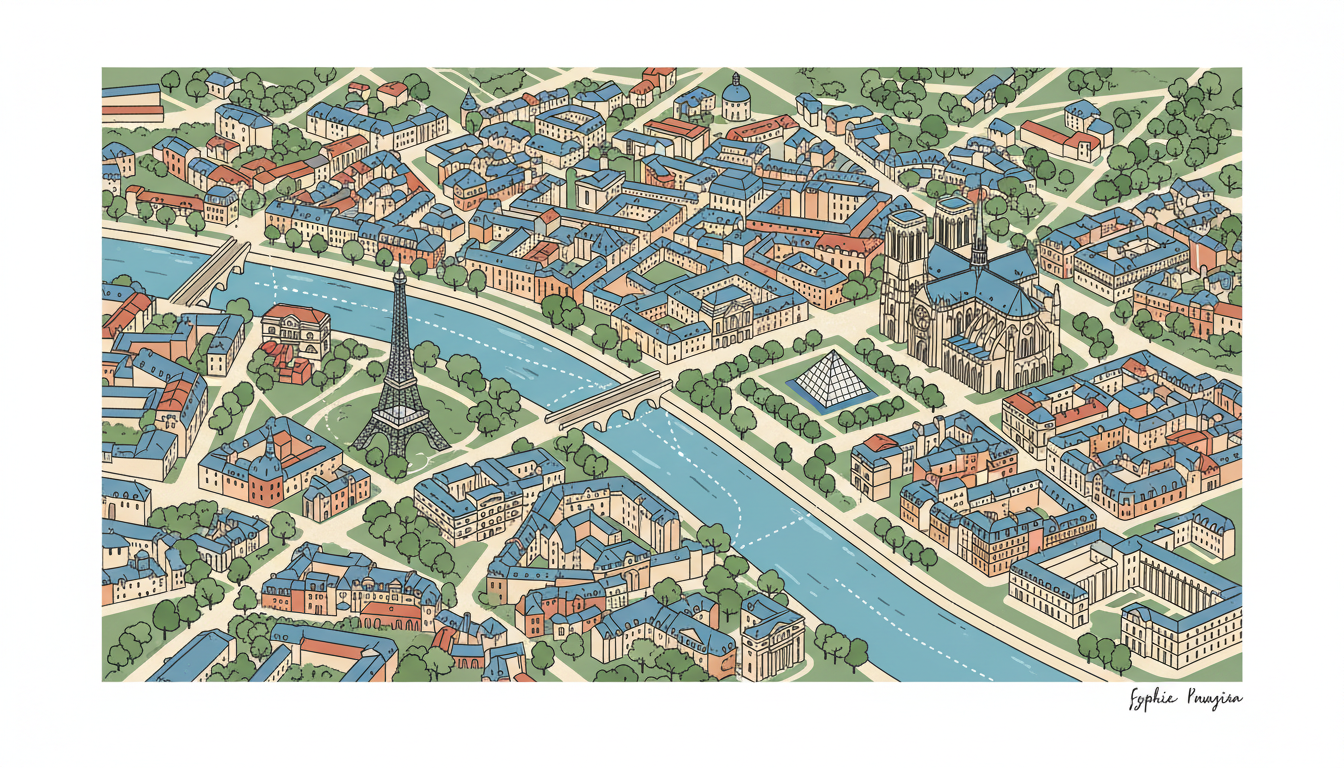
Planning a trip to Paris means making several connected decisions: when to go, how long to stay, what to see, where to stay, and how much to budget. The good news is that Paris works for almost every type of traveler—first-timers, couples, families, solo visitors—as long as you plan around your priorities rather than trying to see everything. This guide gives you the framework to build a trip that actually fits your interests and constraints.
Start With Your Trip Length and Timing
Your available time determines everything else. Three days lets you cover the essential monuments and one or two neighborhoods. Five to seven days gives you breathing room to explore different districts, take a day trip, and experience Paris at a slower pace. Longer trips allow for deeper neighborhood exploration and multiple excursions.
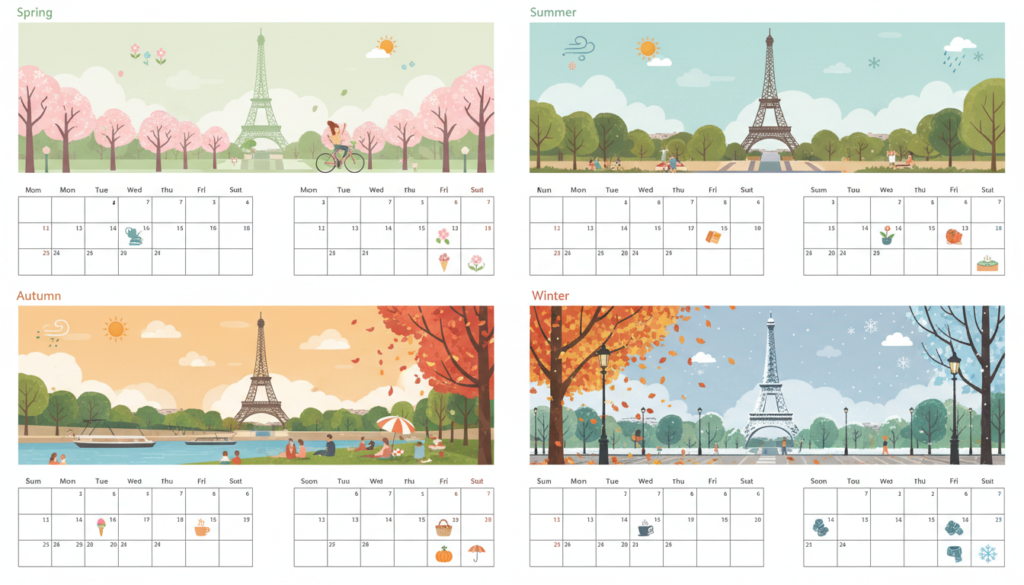
Timing matters more than most travelers realize. Summer brings long daylight hours and outdoor events but also crowds and higher prices. Spring and fall offer moderate weather and thinner crowds. Winter has the shortest lines and lowest hotel rates, but expect rain and early darkness. Each season changes what Paris feels like and what activities make sense. Our seasonal guide breaks down what to expect month by month, including typical weather, crowds, and events.
Book flights and central accommodation as early as possible—Paris hotels in desirable neighborhoods fill up months ahead for peak season. Museums and major attractions rarely require advance tickets except for the Eiffel Tower summit and occasional special exhibitions, but buying skip-the-line tickets online saves significant time during busy periods.
Match Your Itinerary to Your Travel Style
The biggest planning mistake we see is trying to fit too much into each day. A sustainable Paris itinerary includes two to three main activities per day with time for meals, travel between neighborhoods, and unplanned discoveries. Trying to see four museums in one day leaves you exhausted and unable to absorb anything.

Build your days around neighborhoods rather than bouncing across the city. Spend a morning in the Marais, an afternoon on the Left Bank, an evening in Montmartre—this approach reduces travel time and lets you experience each area’s distinct character. Our itinerary guide provides day-by-day frameworks for trips of different lengths.
First-time visitors face a particular challenge: Paris has dozens of world-famous sites, but you can’t see them all in one trip. Focus on your top five must-sees, add a few secondary interests, and accept that you’ll miss things. The Louvre alone could fill two days if you tried to see everything. Better to see fewer places properly than rush through a checklist. Our first-timer guide helps you identify what truly matters to you.
Different types of travelers need different approaches. Couples often want a mix of iconic sights and romantic experiences—neighborhood walks, wine bars, Seine-side picnics. Families need to balance children’s attention spans with adult interests, which means shorter museum visits, more parks, and strategic treat breaks. Solo travelers have complete flexibility but might want to join a walking tour or two for company and context. We’ve written specific guides for couples and families that address these different needs.
Budget Realistically for Paris Costs
Paris is expensive, but costs vary enormously based on your choices. A budget traveler staying in hostels, eating picnic lunches, and walking everywhere might spend €70-100 per person per day. A mid-range visitor in a three-star hotel, eating one restaurant meal daily, and taking some taxis might spend €200-300 per day. Luxury travelers easily spend €500+ per day on five-star hotels, Michelin-starred meals, and private experiences.
The biggest expenses are accommodation, food, and transportation. Central Paris hotels start around €100-150 per night for basic comfort; expect €200-400 for well-located mid-range options. Meals range from €8-15 for casual cafés to €30-60 for decent sit-down restaurants to €100+ for fine dining. The metro costs €2.10 per ride or €16.90 for a 10-ticket carnet; taxis from the airport to central Paris typically run €50-70 depending on traffic and time of day.
Museum and monument entry fees add up: major sites cost €12-20 each. The Paris Museum Pass (€62 for two days, €77 for four days, €92 for six days) saves money only if you visit many museums in a short time—calculate whether it makes sense for your specific itinerary. Many museums offer free entry on the first Sunday of each month, but expect long lines.

Hidden costs catch travelers off guard: coffee at a café table costs more than at the counter, restaurant water isn’t always free (ask for a carafe d’eau for tap water), and many public toilets charge €1-2. Budget extra for these small daily expenses. Our detailed budget planning guide helps you estimate realistic costs and find savings that don’t compromise your experience.
Practical Planning Decisions
Where you stay shapes your daily experience. The central arrondissements (1st through 8th) put you within walking distance of major sights but cost more. The outer arrondissements and neighborhoods like the Marais, Latin Quarter, or Montmartre offer better value and more local character but require more metro use. Avoid staying far from metro lines—you’ll waste time and money on taxis.
Getting from the airport to your hotel is your first Paris challenge. The RER B train costs €11.80 and takes 30-50 minutes to central Paris, but involves stairs, crowds, and potential confusion for first-timers with luggage. Taxis cost €50-70 and take 30-90 minutes depending on traffic. Private transfers cost slightly more than taxis but include meet-and-greet service and fixed prices regardless of traffic—worth considering if you arrive tired after a long flight or travel with children.
Within Paris, the metro is efficient and cheap for most trips. Taxis make sense late at night, when carrying shopping, or traveling with young children. Walking is often faster than you’d expect for short distances—the distance from Notre-Dame to the Louvre is only 1.5 kilometers and far more interesting on foot than underground.
Language matters less than you might fear. Most Paris tourism workers speak functional English, and younger Parisians often speak it well. That said, learning basic French courtesy phrases (bonjour, merci, pardon, au revoir) makes every interaction smoother. Parisians respond better to attempted French followed by “Do you speak English?” than to assuming everyone speaks English.
Common Planning Mistakes to Avoid
After years of helping travelers plan Paris trips, we see the same mistakes repeatedly. Underestimating travel time between sites wastes hours—factor in walking to the metro, waiting for trains, and walking from the station to your destination. Overestimating your energy leads to abandoned plans and frustration—jet lag, museum fatigue, and unfamiliar streets are more tiring than you expect.
Booking rigid, pre-paid activities for every day removes flexibility. Weather changes, you get sick, you discover something more interesting—leave room to adjust. That said, completely winging it in Paris often means missing out on popular restaurants and experiences that require reservations.
Ignoring meal timing causes problems. Parisian restaurants serve lunch roughly 12:00-14:30 and dinner 19:00-22:00. Arriving at 15:00 expecting lunch or 18:00 expecting dinner means limited options. Many cafés serve food all day, but proper restaurants follow these windows.
Expecting Paris to match an idealized image sets you up for disappointment. Real Paris includes pickpockets, occasional rudeness, dog waste on sidewalks, and crowds at major sites. It’s also extraordinarily beautiful, historically rich, and full of genuine pleasures—but it’s a real city with real urban challenges, not a theme park.
Getting Help With Planning
Some travelers enjoy planning every detail themselves. Others prefer expert help to avoid mistakes and save research time. The middle ground—doing basic planning yourself but getting specific advice on tricky questions—works well for most people.
Free resources include our Facebook community where you can ask questions and get answers from experienced Paris travelers and locals. The recurring questions in that community—airport transfers, metro versus taxis, museum passes, tipping, common scams—reveal what actually confuses people on the ground, not what guidebooks think matters.

Professional planning services help you build a custom itinerary based on your specific interests, constraints, and questions. This makes sense if you have limited time, complex logistics (multi-generational family, mobility issues, special occasions), or simply want expert advice without spending hours researching. The process typically involves a consultation to understand your priorities, then a detailed day-by-day plan with restaurant suggestions, booking advice, and insider tips. Expect this to take a week or two and cost a few hundred euros depending on complexity.
Guided tours solve the context problem—you can read about Notre-Dame’s history, but a knowledgeable guide brings the stones to life and answers your specific questions. Small-group or private tours let you move at your own pace and focus on your interests rather than following a fixed script. We offer several tours in Paris covering major monuments, neighborhoods, and food experiences, all led by licensed guides who live in the city.
Final Planning Checklist
Before you leave, confirm you have: valid passport (check expiration date—it must be valid for your entire stay), flight confirmations, hotel reservations, travel insurance, and any advance tickets you’ve purchased. Download offline maps of Paris to your phone. Note your hotel address in French to show taxi drivers. Have both a credit card and some cash—most places accept cards, but small vendors and cafés sometimes don’t.
Check current entry requirements for France—these can change. As of this writing, US, Canadian, UK, and Australian visitors don’t need visas for stays under 90 days, but you should verify current rules before your trip.
Leave space in your plans for spontaneity. The best Paris moments often happen when you’re not rushing to the next scheduled activity—lingering over coffee, stumbling into a neighborhood market, taking an unplanned walk along the Seine. Build the framework, then let Paris surprise you within it.
How this article was made: drafted with AI assistance from an outline and notes by paris75, then reviewed, fact-checked and edited by paris75 before publication. Images are AI-generated illustrations.