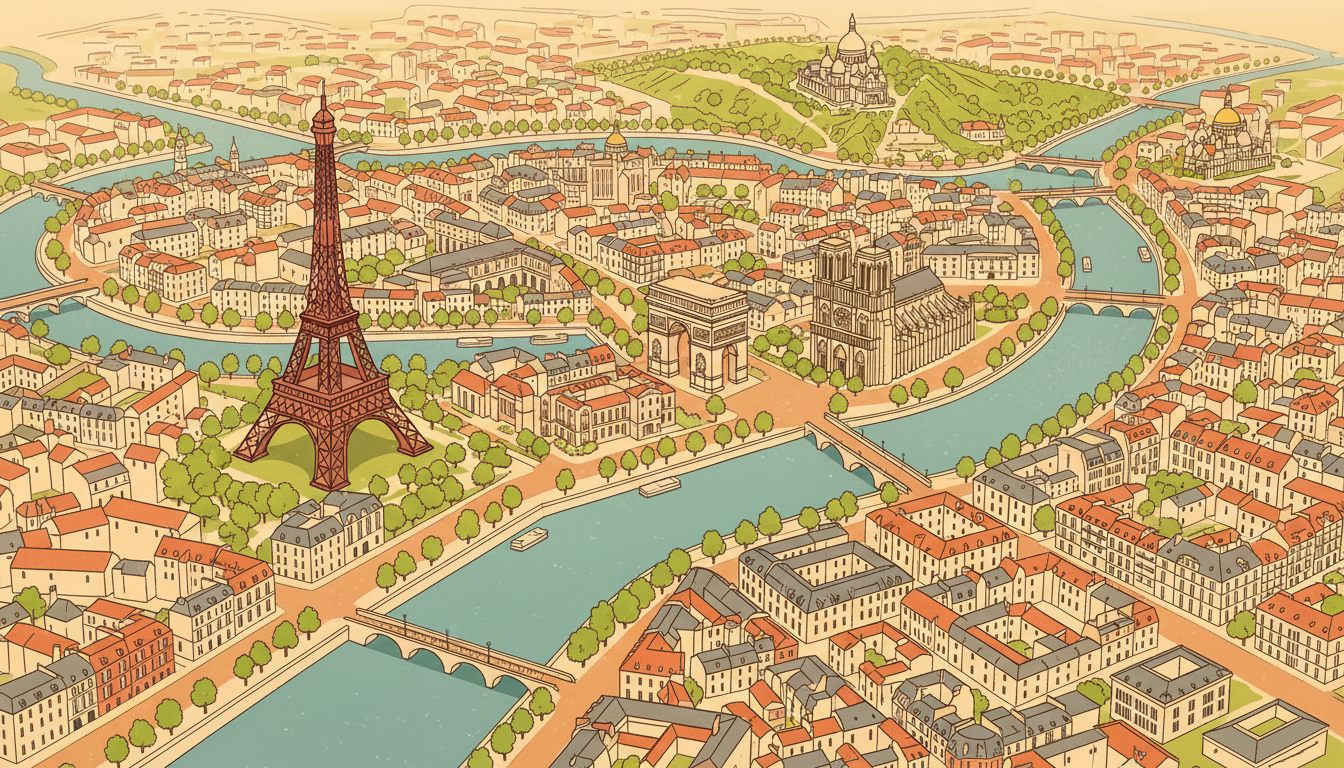
Paris has more than 130 museums and countless monuments, which means you’ll need to make choices. The best things to do in Paris depend on your interests, how much time you have, and what kind of experience you want. Most first-time visitors try to cram in too much and end up exhausted. A better approach: pick a few priorities, leave time to wander, and skip anything that doesn’t genuinely interest you.
Key points
- Choose 2-3 major museums maximum for a 3-4 day trip
- Book timed entry tickets weeks ahead for popular sites
- Museums are quieter on weekday mornings and late afternoons
- Many smaller museums and monuments are less crowded and equally rewarding
- Leave at least half your time unscheduled for walking and discovering
How to choose what to see
Start by being honest about what you actually enjoy. If you find art museums exhausting after an hour, don’t plan three in one day. If you’re not interested in royal history, skip Versailles no matter how many people say it’s essential.
Look at your total days in Paris and work backwards. A four-day trip gives you time for maybe three major museums, two or three monuments, and a river cruise or park visit. That’s it if you also want to eat well, shop, and experience neighborhoods. Trying to do more means you’ll remember nothing clearly.
Consider these trade-offs:
- Big-name museums (Louvre, Orsay) vs smaller focused collections
- Famous landmarks everyone photographs vs quieter beautiful spaces
- Paid attractions vs free experiences like markets and parks
- Guided tours with context vs exploring at your own pace
The major categories
Iconic landmarks
Eiffel Tower, Arc de Triomphe, Notre-Dame. These define Paris for most visitors and deliver what they promise, but require advance planning and patience with crowds.
Art museums
Louvre, Orsay, Orangerie, Rodin. World-class collections that can overwhelm. Pick one or two based on which periods you care about most.

Historic monuments
Sainte-Chapelle, Panthéon, Conciergerie. Smaller, less exhausting, often stunning. Good for breaking up museum-heavy days.
Neighborhoods and streets
Marais, Montmartre, Latin Quarter, Canal Saint-Martin. Free to explore, full of life, where you’ll find the Paris you imagined.
Parks and views
Luxembourg Gardens, Tuileries, Seine riverbanks. Essential for rest, picnics, and watching Parisians live their lives.
Less-visited gems
Musée Carnavalet, Sainte-Chapelle, covered passages. Often more rewarding per hour than famous sites, with a fraction of the crowds.
What first-timers should prioritize
If this is your first Paris trip, you probably want to see the famous things. That’s completely reasonable. The Eiffel Tower is famous because it’s extraordinary, not because of marketing.
A solid first-time list for 4-5 days:
- One major art museum Choose Louvre for breadth, Orsay for Impressionists, or Orangerie if you only have an hour.
- Two or three landmarks Eiffel Tower, Arc de Triomphe, and either Sainte-Chapelle or Notre-Dame exterior (currently under restoration).
- One neighborhood walk Marais or Montmartre, ideally with a local guide who can explain what you’re seeing.
- One view or river experience Seine cruise, Montparnasse Tower, or Sacré-Cœur steps at sunset.
- One smaller museum or monument Based on your specific interests: military history, fashion, medieval Paris, modern art.
That’s enough structure. Fill the rest of your time with cafés, markets, bakeries, and getting lost.
Practical booking and timing
The biggest mistake is underestimating how far ahead you need to book. For summer or holiday periods, reserve timed entry tickets 4-6 weeks before your trip. The Eiffel Tower often sells out months ahead for peak times.
Tip
Book your two or three must-see attractions first, then build the rest of your schedule around those confirmed times. This prevents the frustration of finding everything sold out.
Best times to visit major museums: weekday mornings right at opening, or late afternoons after 3pm when tour groups have left. Tuesdays are terrible because many museums close Mondays, so Tuesday absorbs two days of visitors.
The Paris Museum Pass makes sense if you’re visiting 4-5 participating museums in 2-4 days and you’ve confirmed they all require it. For many travelers, buying individual tickets online is simpler and cheaper.

What to skip without guilt
You don’t need to see everything famous. Here’s what you can confidently skip based on your situation:
| Skip this | If this is true | Consider instead |
|---|---|---|
| Louvre | You’re not interested in art or ancient artifacts | Walk the exterior and Tuileries |
| Versailles | You have less than 4 days total or dislike crowds | Luxembourg Gardens |
| Catacombs | You’re claustrophobic or have mobility issues | Père Lachaise Cemetery |
| Eiffel Tower summit | You’re on a tight budget | Montparnasse Tower or Sacré-Cœur |
Some attractions are genuinely overrated for most visitors. The Catacombs involve a long wait for a brief, dark walk through bones. Versailles requires a full day and feels like a factory tour in summer. The Moulin Rouge is expensive dinner theater, not the bohemian Paris of 1900.
Major museums: which and why
The Louvre is enormous and overwhelming. If you go, have a plan: pick one or two departments, use the app or map, and leave after 2-3 hours while you’re still enjoying it. Most people stay too long and remember nothing but tired feet.
Musée d’Orsay is more manageable: one building, one era (1848-1914), the world’s best Impressionist collection. If you like Monet, Renoir, or Degas, this is your priority. The building itself, a converted railway station, is beautiful.
Smaller museums often deliver more value per hour: Rodin Museum has a gorgeous garden, Orangerie has Monet’s Water Lilies in purpose-built oval rooms, Musée Carnavalet tells Paris history through objects and rooms.
Note
Most Paris museums close one day per week, usually Monday or Tuesday. Check before you plan. Some also have late opening one evening per week with fewer crowds.
Landmarks and monuments
The Eiffel Tower is worth seeing, but you don’t necessarily need to go up. The view from Trocadéro or Champ de Mars is free and arguably better for photos. If you do ascend, book the second level rather than the summit unless weather is perfect; the summit adds expense and queuing for a view that’s too high to see details.
Arc de Triomphe is less crowded and offers a view that includes the Eiffel Tower. The climb is manageable, and watching traffic circle the roundabout below is mesmerizing.
Sainte-Chapelle is the most underrated major sight. Fifteen minutes of stained glass that looks like a jewel box. Go on a sunny day. Book ahead because capacity is limited.
Notre-Dame’s interior remains closed for restoration work. You can view the exterior and the reconstruction progress from the square and riverbanks. The surrounding Île de la Cité is worth exploring regardless.
Beyond the famous list
The less-crowded Paris attractions often provide the most memorable moments. Covered passages in the 2nd and 9th arrondissements are glass-roofed shopping arcades from the 1800s. Musée Carnavalet is free and tells the city’s story through period rooms and artifacts. Père Lachaise Cemetery is a peaceful sculpture park where famous people happen to be buried.

Markets give you Paris life without museum fatigue. Marché d’Aligre, Marché Bastille, and Rue Cler are working neighborhood markets, not tourist shows. Go mid-morning on a weekend.
Pros of less-famous sites
- Shorter or no lines, book day-of or walk up
- Fewer crowds means you can actually see things
- Often free or much cheaper than major museums
- More authentic neighborhood context
Cons of less-famous sites
- Less English signage and information
- May not impress friends back home
- Harder to find detailed visitor information
- Sometimes closed for events or renovations
River, parks and outdoor experiences
A Seine river cruise is worthwhile once, ideally at sunset or after dark when monuments are lit. The one-hour loop from near the Eiffel Tower shows you the city’s layout and major buildings from a different angle. Skip the dinner cruises unless you care more about the experience than the food quality.
Luxembourg Gardens and Tuileries are essential breaks between museums. Bring a book, buy a crêpe, rent a toy sailboat, watch children play. This is Paris too, and it’s free.
Walking the Seine riverbanks, especially the Left Bank from Musée d’Orsay toward Notre-Dame, gives you bridges, bookstalls, and views without an agenda. The Promenade Plantée is a park built on an old railway viaduct, like New York’s High Line but quieter.
Guided tours vs independent visiting
Museums are better with a guide if you want context and stories, not just objects. A two-hour guided Louvre tour covers highlights with explanations; on your own you’ll wander randomly and miss significance. Our small-group tours focus on making art and history relevant rather than lecturing.
Neighborhood walks benefit hugely from a local guide who can explain why buildings look the way they do, what happened on this corner, which bakery is worth trying. You can’t get that from an app.
Landmarks like the Eiffel Tower or Arc de Triomphe don’t need guides. The experience is the view and the structure itself.

Warning
Verify current opening hours, closure days, and ticket requirements directly with each attraction before your visit. Museums occasionally close for holidays, strikes, or events, and ticket policies change.
How much time at each attraction
Realistic time budgets including entry, visit, and exit:
- Louvre: 2.5-4 hours for a focused visit, full day if you love museums
- Musée d’Orsay: 2-3 hours
- Eiffel Tower: 2-3 hours total including security and queues
- Sainte-Chapelle: 45 minutes to 1 hour
- Arc de Triomphe: 1 hour
- Notre-Dame exterior: 20-30 minutes
- Seine cruise: 1 hour on the water, 1.5 hours total
- Versailles: 4-6 hours minimum, full day recommended
Add travel time between sites. Paris is walkable, but crossing from Montmartre to the Latin Quarter takes 45 minutes on foot or 30 minutes by metro with transfers.
Common mistakes to avoid
Trying to see too much is the universal error. Three major museums in one day means you’ll remember nothing and enjoy nothing. Your brain can only absorb so much, and your feet can only walk so far.
Not booking ahead wastes hours in line or results in sold-out disappointment. Every major Paris attraction now uses timed entry. Book when you book your hotel.
Going to museums on Tuesdays (when many close Mondays) or weekend afternoons guarantees maximum crowds. Weekday mornings are dramatically better.
Skipping smaller museums because they’re not famous means missing some of the best experiences. Musée Rodin, Musée Jacquemart-André, and Musée Carnavalet are treasures.
Eating only near major tourist sites costs more and tastes worse. Walk three blocks away from any monument and prices drop by a third.
Sample schedules by trip length
For a two-day trip: Louvre or Orsay, Eiffel Tower, Sainte-Chapelle, one neighborhood walk, one evening river cruise. That’s enough.
For four days: add Arc de Triomphe, a second museum, Montmartre, Luxembourg Gardens, and more neighborhood time. Maybe Versailles if you’re interested in palaces.
For a week: add smaller museums based on interests, day trips, more markets and parks, repeat neighborhoods at different times of day. You’ll still have to skip things.
Whatever your length, leave at least one morning or afternoon completely unplanned. The best Paris moments happen when you’re not rushing to the next timed ticket.
Do I need to book everything in advance?
Book timed entry for major attractions (Eiffel Tower, Louvre, Orsay, Sainte-Chapelle, Versailles) as early as possible, especially for summer or holidays. Smaller museums and monuments can often be booked a few days ahead or sometimes day-of. Parks, neighborhoods, and river cruises are more flexible.
Is the Paris Museum Pass worth buying?
It depends on how many participating museums you plan to visit in a short time. If you’re seeing 4-5 pass-eligible museums in 2-4 days, it can save money and offers skip-the-line access at some sites. For slower-paced trips or if your interests are outside the pass museums, individual tickets are often better. Check the detailed pass analysis to decide.
What can I see for free in Paris?
All parks and gardens, most churches (except monuments like Sainte-Chapelle), riverbank walks, neighborhoods, markets, window shopping, and many museum permanent collections on the first Sunday of each month. Notre-Dame exterior, Sacré-Cœur Basilica interior, and cemetery visits are free. You can have a wonderful Paris day without spending anything on attractions.
How much time should I spend at the Louvre?
Most people find 2-3 hours is enough for a first visit focusing on highlights. Serious art lovers might want 4-6 hours or multiple visits. Going longer than 3 hours in one visit usually leads to exhaustion and diminishing returns. Better to see less and remember it than to race through everything.
What should I skip if I only have three days?
Skip Versailles (requires a full day), skip multiple art museums if you’re not passionate about art, skip the Catacombs unless you specifically want that experience, and skip trying to see every famous landmark. Focus on 2-3 major sights, one or two museums maximum, and spend the rest of your time in neighborhoods, cafés, and markets.
How this article was made: drafted with AI assistance from an outline and notes by paris75, then reviewed, fact-checked and edited by paris75 before publication. Images are AI-generated illustrations.